

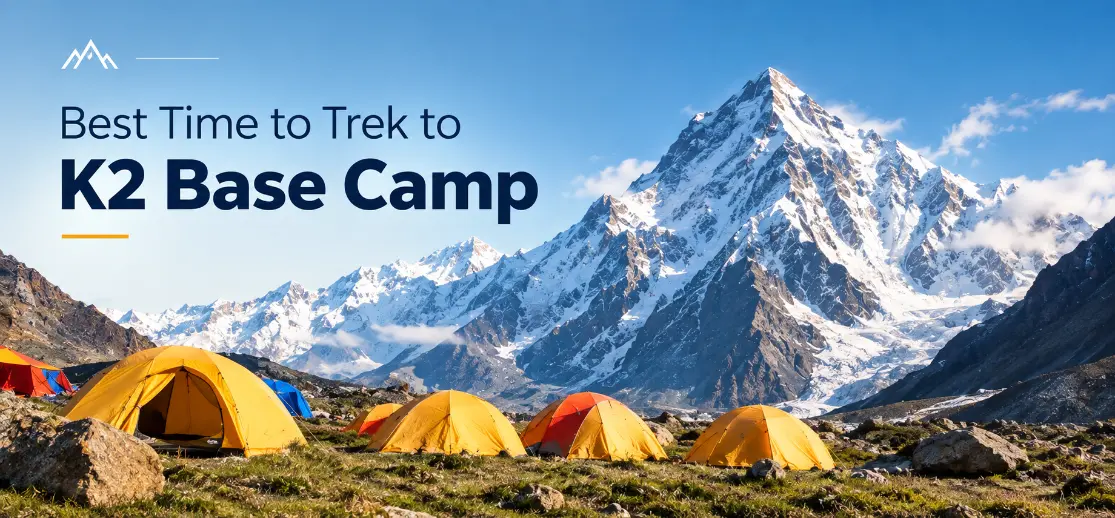
The best time to trek to K2 Base Camp is generally from late June to August, with July and early August offering some of the most favourable conditions for this challenging high-altitude adventure. The broader trekking season can extend into early or mid-September, depending on weather, snow conditions, and the availability of local trekking support.
Located in Pakistan’s spectacular Karakoram Range, K2 Base Camp attracts trekkers from around the world who want to experience towering mountains, dramatic glaciers, remote valleys, and unforgettable Himalayan-Karakoram scenery. The journey passes through the famous Baltoro Glacier and Concordia, providing remarkable views of K2, Broad Peak, and surrounding peaks.
Choosing the right time is essential because mountain weather can change quickly, glacier routes shift constantly, and temperatures can drop below freezing at higher camps. Whether you are planning your first major trekking expedition or are an experienced mountain traveller, understanding seasonal conditions will help you prepare for a safer, more rewarding journey.
In this guide, we explain the best months for the K2 Base Camp trek, what to expect from the weather, and how to choose the right departure date for your adventure with K2 Adventure Pakistan.
When Is the Best Time to Trek to K2 Base Camp?
The ideal period for the K2 Base Camp trek is late June through August, particularly July and early August. During this period, the main trekking route is generally more accessible, trekking operations are active, and conditions are often more favourable than during spring or late autumn.
According to established trekking guidance, the main season typically runs from mid-June to mid-September. However, the exact opening and closing dates vary with local conditions.
Here is a quick overview:
- Late June: Suitable for early-season trekkers prepared for colder weather and possible snow.
- July: One of the best months for relatively favourable trekking conditions and mountain views.
- August: An excellent option for exploring the Baltoro Glacier and Concordia.
- Early September: Potentially quieter, with cooler temperatures and a greater need to monitor weather forecasts.
For most travellers, July or early August is a sensible starting point when choosing a K2 Base Camp trekking date. However, no month guarantees clear skies or safe trail conditions. Always confirm the latest situation with an experienced local trekking operator before departure.
K2 Base Camp Trekking Season: Month-by-Month Guide
The Karakoram has a relatively short trekking season. Understanding the differences between months can help you select a departure that matches your fitness, experience, and travel preferences.
Late June: The Beginning of the Trekking Season
Late June marks the beginning of the main trekking window for many K2 Base Camp itineraries. Temperatures generally become more manageable than in spring, and trekking teams begin travelling through the Baltoro region.
Early-season trekkers may enjoy a quieter experience, but snow can remain on higher sections of the route. Meltwater can also make streams and river crossings more challenging.
Why choose late June?
- Potentially fewer trekking groups.
- An opportunity to experience the Karakoram early in the season.
- Long daylight hours for trekking.
- A suitable option for well-prepared travellers with flexible schedules.
Things to consider: Cold nights, lingering snow, difficult glacier conditions, and weather-related delays are possible. Late June is best approached with guidance from a local operator who can assess current route conditions.
July: One of the Best Months for the K2 Base Camp Trek
July is widely regarded as one of the best months for trekking to K2 Base Camp. The main route is generally open, and the summer season offers favourable opportunities to explore the Baltoro Glacier and the spectacular mountain scenery around Concordia.
It is also an important period for mountaineering expeditions attempting K2. Depending on their schedules, trekkers may see expedition activity in the surrounding mountains.
Why trek to K2 Base Camp in July?
- Generally favourable conditions for high-altitude trekking.
- Excellent opportunities for mountain photography when skies are clear.
- Active trekking and expedition support services.
- Long summer days for walking and exploring.
- Opportunities to experience Concordia’s dramatic landscape.
July can also be busy, so book your preferred departure well in advance. Remember that even during peak season, snow, wind, storms, and sudden temperature changes can affect the itinerary.
August: Another Excellent Month for K2 Base Camp
August is another popular month for the K2 Base Camp trek. Summer conditions generally continue across much of the trekking region, although local weather remains unpredictable.
For travellers who cannot depart in July, August offers another excellent opportunity to explore the Karakoram. You can walk across the Baltoro Glacier, visit Concordia, and enjoy views of some of the world’s most impressive mountain peaks.
Benefits of trekking in August:
- Established trekking-season operations.
- Opportunities for glacier trekking and mountain photography.
- Long days suitable for a demanding trekking itinerary.
- Access to iconic viewpoints along the Baltoro route, subject to conditions.
As August progresses, watch forecasts and the condition of the upper glacier. If your itinerary includes Gondogoro La, the timing becomes particularly important because crossing conditions can deteriorate quickly.
Early September: A Quieter Trekking Experience
Early September can suit the K2 Base Camp trek, particularly for travellers who prefer a potentially quieter trail and cooler conditions.
However, the end of the trekking season brings additional uncertainty. Temperatures fall, daylight gradually decreases, and early snowfall or storms can affect travel plans.
Why consider early September?
- Potentially fewer trekkers than during the busiest summer weeks.
- Cooler conditions along the approach route.
- Excellent photography opportunities when visibility is good.
- A chance to experience the Karakoram towards the end of summer.
September departures require careful planning and flexibility. Confirm that your complete itinerary, accommodation and camping arrangements, permits, and return transport suit the dates you choose.
Late September is less predictable than early September, so don’t assume the route will remain accessible throughout the month.
K2 Base Camp Weather: What Should You Expect?
Weather is one of the most important factors when planning a K2 Base Camp trek. The journey begins in lower-altitude areas and gradually moves into a cold, high-altitude environment, so temperatures and conditions can vary significantly during the same trip.
Weather in Islamabad and Skardu
Islamabad can be hot and humid during the summer trekking season, with monsoon-related rain possible. Skardu, the main gateway to the Baltoro region, generally has a drier mountain-valley climate. However, dust, wind, and changing weather can affect travel.
Travellers should prepare for warm conditions early in the trip and much colder temperatures as they approach the glacier.
Weather on the Baltoro Glacier
As the trek gains altitude, temperatures drop, especially at night. The glacier environment can include strong winds, snow, ice, uneven surfaces, and rapidly changing visibility.
At higher camps and around Concordia, freezing temperatures are possible even during summer. Sunlight can also be intense, so sun protection is essential.
Pack clothing for a wide range of conditions, including:
- Thermal base layers.
- A warm insulated jacket.
- Waterproof and windproof outer layers.
- Waterproof trekking boots with suitable grip.
- Warm gloves, a hat, and spare socks.
- UV-protective sunglasses and high-SPF sunscreen.
Always follow your guide’s advice about weather changes, glacier movement, and safe walking conditions.
Is the K2 Base Camp Trek Possible Outside Summer?
The K2 Base Camp trek is generally not recommended as a standard trekking trip outside the main summer season.
Spring: April to May
Spring can bring substantial snow at high elevations, cold nights, and difficult access to the upper glacier. Trekking infrastructure and transport arrangements may also be limited.
Although spring can be beautiful in other parts of northern Pakistan, it is not generally the preferred season for a conventional K2 Base Camp trek.
Autumn: Late September to October
Autumn brings colder temperatures and an increasing risk of snowfall. Weather disruptions can make the upper route more difficult, and trekking support may become less available as the season ends.
Winter: November to March
Winter conditions in the Karakoram are severe. Extreme cold, heavy snow, avalanche hazards, and limited support make a standard K2 Base Camp trekking itinerary unsuitable for most travellers.
For a conventional guided trek, plan within the established summer window and confirm current conditions before booking.
Best Time for the Baltoro Glacier and Concordia Trek
The Baltoro Glacier and Concordia are major highlights of the K2 Base Camp journey. Concordia is famous for its extraordinary concentration of high peaks, including views of K2 and Broad Peak in favourable weather.
July and August are generally excellent months to explore this region, provided local conditions allow safe passage.
The Baltoro Glacier is not a conventional, maintained walking trail. Its surface changes as the ice moves, and trekkers may encounter loose rocks, uneven terrain, streams, and crevasses. Conditions can change even during the peak season.
An experienced local guide helps with route-finding, daily decisions, and monitoring changing conditions. If your itinerary includes Gondogoro La, remember that this is a more demanding option with separate high-pass crossing requirements.
How to Choose the Right K2 Base Camp Trek Departure Date
Choosing the best departure involves more than selecting a month. Consider the following factors before booking your trip.
1. Your trekking experience: The journey involves several days of demanding walking, glacier travel, and camping at high altitude. Previous multi-day trekking experience is beneficial.
2. Your preferred conditions: July and early August are sensible choices for travellers prioritising the core trekking season. Early-season and late-season departures require additional flexibility.
3. Your travel schedule: Allow extra days for possible flight cancellations, road delays, bad weather, and changes to the trekking itinerary.
4. Your equipment: Invest in suitable boots, warm sleeping equipment, layered clothing, and sun protection. Ask your operator for a route-specific packing list.
5. Your trekking operator: Choose an experienced local company that provides qualified guides, appropriate permits, a clear itinerary, and an emergency plan.
Before confirming your trip, review the departure dates and itinerary offered by K2 Adventure Pakistan and ask about the latest route conditions.
Why Trek to K2 Base Camp with K2 Adventure Pakistan?
K2 Base Camp is one of Pakistan’s most rewarding high-altitude trekking destinations. Still, it requires careful preparation and reliable logistical support.
K2 Adventure Pakistan offers a dedicated K2 Base Camp Trek in Pakistan with information about scheduled departures, trek highlights, weather, and preparation.
When comparing trekking packages, check what is included in the price, such as guiding services, porters, camping equipment, meals, permits, transport, and emergency arrangements. Inclusions vary by operator, so request a written breakdown before booking.
A well-organised trip helps you concentrate on the experience: walking across the legendary Baltoro Glacier, exploring Concordia, and witnessing the magnificent Karakoram landscape.
Ready to plan your adventure? Contact K2 Adventure Pakistan to discuss your preferred travel dates, preparation requirements, and the best K2 Base Camp trekking itinerary for you.
Conclusion: Which Month Is Best for K2 Base Camp?
For most trekkers, July and early August are the best months to trek to K2 Base Camp, thanks to the established summer trekking season and generally favourable access to the Baltoro Glacier.
Late June can suit travellers seeking an early-season departure, while early September may appeal to those who prefer a quieter experience and can accept greater weather uncertainty.
Regardless of your chosen month, the Karakoram demands preparation, flexibility, and respect for the mountain environment. Check the latest conditions with a reliable local operator, prepare for freezing nights, and allow extra time for unexpected delays.
Start planning your journey with K2 Adventure Pakistan and prepare for an unforgettable adventure to the foot of K2, one of the world’s most spectacular mountain destinations.
FAQ’s About the Best Time to Trek to K2 Base Camp
July is one of the best months for the K2 Base Camp trek because it falls within the main summer trekking season. Early August is another excellent option, although weather and glacier conditions can change at any time.
Yes, late June can be suitable, depending on snow conditions, river crossings, and local access. Early-season trekkers should prepare for cold nights and possible weather-related delays.
Yes. August is part of the main trekking season and generally offers good opportunities to explore the Baltoro Glacier and Concordia. Always confirm current conditions before departure.
Early September can be possible, but colder temperatures and the risk of early snowfall make conditions less predictable. Late September departures require particular caution and confirmation from an experienced local operator.
Temperatures vary with altitude, wind, and weather. Even during summer, nights at high camps can fall below freezing. Warm layers, an appropriate sleeping bag, and weatherproof clothing are essential.
A typical guided trip from Islamabad and back takes around 20–22 days. However, itineraries vary by operator, route, acclimatisation schedule, and weather. Check the specific itinerary before booking.
Comments