

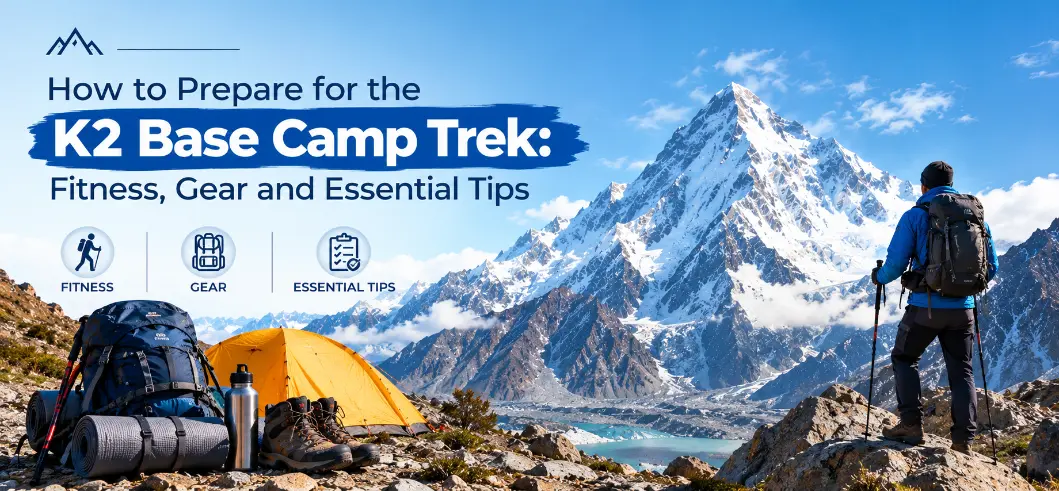
The K2 Base Camp Trek is one of Pakistan’s most rewarding high-altitude trekking adventures. Set in the spectacular Karakoram Mountains, the journey takes you across the legendary Baltoro Glacier, through dramatic mountain landscapes, and to the base of K2, the world’s second-highest mountain at 8,611 metres.
However, reaching K2 Base Camp requires more than enthusiasm. Trekkers must prepare physically, select the right equipment, understand altitude-related risks and be ready for changing mountain weather. The route is remote, facilities are limited, and several consecutive days of walking can be physically demanding.
So, how do you prepare for the K2 Base Camp Trek?
The best approach is to start training several months before departure, practise walking on uneven terrain, invest in reliable trekking gear and learn how to manage your pace at altitude. Careful preparation will help you enjoy the journey more comfortably and handle the Karakoram’s challenges better.
In this guide, K2 Adventure Pakistan explains how to prepare for the K2 Base Camp Trek, including fitness training, packing essentials, altitude acclimatisation, nutrition and practical planning tips.
1. Understand the K2 Base Camp Trek Difficulty
Before starting your training, understand what the trek involves. The standard K2 Base Camp Trek is a challenging, multi-day, high-altitude trek rather than a technical summit climb.
The route typically begins in Islamabad, continues to Skardu and Askole, then follows the Baltoro Glacier toward Concordia and K2 Base Camp. Depending on the itinerary, trekkers may spend approximately three weeks travelling, trekking and returning to Islamabad.
You should be prepared for:
- Several consecutive days of walking.
- Approximately 5–8 hours of trekking on many trekking days, depending on the route and conditions.
- Rocky paths, glacier moraine and uneven surfaces.
- Cold nights and changing weather.
- Camping in remote mountain locations.
- Increasing physical effort at high altitude.
The standard K2 Base Camp route is generally non-technical, but glacier travel and remote terrain still require care and experienced guidance.
If you plan to add Gondogoro La Pass, expect a more demanding itinerary involving steep snow and ice and potentially technical equipment. Do not assume that preparation for the standard K2 Base Camp Trek alone is sufficient for the pass crossing.
2. Start Your K2 Base Camp Trek Fitness Training Early
Physical preparation is one of the most important steps when planning a K2 Base Camp Trek. You don’t need to be an elite athlete, but you should build the endurance and strength to walk for several hours across challenging terrain on consecutive days.
Ideally, begin a structured training programme 12–16 weeks before departure, or earlier if you are new to hiking or currently have a low fitness level.
Cardiovascular training
Walking uphill for hours requires good aerobic endurance. Build your cardiovascular fitness gradually with activities such as:
- Brisk walking.
- Hiking on hills or trails.
- Stair climbing.
- Cycling.
- Swimming or other aerobic exercise.
Start with manageable sessions and gradually increase their duration. As your fitness improves, add longer walks.
Strength training for trekking
Strong legs and a stable core can make uneven terrain easier to manage. Include exercises such as squats, step-ups, lunges, calf raises and core-strengthening movements.
Begin with bodyweight exercises if you are new to strength training. Increase resistance gradually and allow time for recovery.
Practise hiking with a backpack.
A backpack changes your balance and increases the effort required during a long walk. Practise with the daypack you intend to use on the trek.
Start with a light load and increase it gradually. Use your training walks to check the fit of your shoulder straps, waist belt and footwear.
Train on uneven terrain.
Walking on trails, gravel and rocky paths helps you develop balance and confidence. If possible, practise controlled uphill and downhill walking rather than training exclusively on flat roads or a treadmill.
The goal is to arrive prepared for sustained walking, not to exhaust yourself before the expedition.
3. Follow a Simple K2 Base Camp Trek Training Plan
Your training programme should progress gradually, balancing endurance, strength and recovery.
| Training phase | Main focus | Suggested activities |
|---|---|---|
| Weeks 1–4 | Build a fitness foundation | Brisk walks, easy cycling and basic strength exercises |
| Weeks 5–8 | Improve endurance | Longer walks, hills, stairs and regular strength sessions |
| Weeks 9–12 | Develop trekking stamina | Hilly hikes, uneven trails and practice with a light backpack |
| Weeks 13–16 | Trek-specific preparation | Longer hikes on consecutive days, equipment testing and recovery |
Adjust this plan to your current fitness and experience. If you have a medical condition, significant joint problems or concerns about exercising at altitude, seek advice from a qualified healthcare professional before beginning strenuous training.
During the final week before departure, reduce training intensity and prioritise sleep, hydration and recovery.
4. Prepare a Complete K2 Base Camp Trek Packing List
Packing the right equipment is essential because the weather changes considerably between the lower valleys and the high-altitude glacier region.
Your clothing should protect you from cold, wind, rain and strong sunlight. Avoid relying on a single heavy jacket; a layered clothing system offers greater flexibility.
Essential trekking clothing
Pack the following:
- Moisture-wicking base layers.
- Fleece or mid-layer insulation.
- A warm insulated down or synthetic jacket.
- Waterproof and windproof outer layers.
- Trekking trousers.
- Thermal layers for cold nights.
- Warm gloves and a hat.
- Several pairs of trekking socks.
- Spare comfortable camp clothing.
Footwear and trekking accessories
Your boots should be comfortable, supportive and suitable for rough, uneven terrain. Break them in before the trek to reduce blister risk.
Other useful items include:
- Trekking poles.
- A comfortable daypack.
- A headlamp with spare batteries.
- Sunglasses with strong UV protection.
- High-SPF sunscreen and lip protection.
- Water bottles or a hydration system.
- A personal first-aid and blister-care kit.
- Personal toiletries and quick-drying towels.
Sleeping equipment
Cold nights make suitable sleeping equipment particularly important. Choose a sleeping bag appropriate for the expected minimum temperatures and confirm whether your operator provides a sleeping mat, tent and other camping equipment.
K2 Adventure Pakistan provides a dedicated K2 Base Camp Trek Equipment Guide to help you prepare your packing checklist.
Before travelling, confirm which items you must bring yourself and which equipment the trekking operator supplies.
5. Learn How to Prepare for High Altitude
Altitude is one of the most important challenges of the K2 Base Camp Trek. As elevation increases, each breath provides less oxygen, making physical activity more demanding.
Fitness can help you cope with the physical workload, but being fit does not prevent altitude sickness. Even experienced athletes can develop altitude-related illness.
Acclimatise gradually
A sensible itinerary gives your body time to adjust to increasing elevation. Don’t treat rest and acclimatisation days as wasted time; they’re an important part of a high-altitude trekking plan.
K2 Adventure’s itinerary includes a preparation and acclimatisation day in Skardu and a rest day at Paiju before the more demanding glacier section.
Follow your guide’s instructions, maintain a steady pace and avoid rushing to keep up with faster trekkers.
Recognise altitude sickness symptoms.
Common symptoms of acute mountain sickness can include headache, nausea, dizziness, unusual fatigue and difficulty sleeping.
Tell your guide promptly if you develop symptoms. Do not continue ascending while symptoms are worsening. A severe headache with confusion, difficulty walking straight, breathlessness at rest, or a worsening cough can indicate a medical emergency that requires immediate assistance and descent.
Discuss altitude-related health concerns and any preventive medication with a qualified healthcare professional before departure. Do not self-prescribe medication based on advice from other trekkers.
6. Practise Hydration and Nutrition Before the Trek
Nutrition helps support your training and recovery. During the trek, you will need enough food and fluids to sustain long days of walking in a cold, demanding environment.
Before departure
Eat balanced meals containing carbohydrates, protein, healthy fats, fruit and vegetables. Carbohydrates provide energy for endurance activities, while protein supports muscle recovery.
Avoid sudden, restrictive diet changes immediately before the trip.
During trekking
Carry water and drink regularly throughout the day. Your guide or trekking team should explain how they treat and make drinking water safe at camps.
Useful trekking snacks include:
- Nuts and dried fruit.
- Energy bars.
- Biscuits or crackers.
- Chocolate.
- Other familiar, easy-to-carry snacks.
Follow the expedition’s meal arrangements and tell your operator about dietary requirements before departure. Your appetite may decrease at altitude, so regular meals and manageable snacks can help you maintain energy.
7. Choose the Best Time for the K2 Base Camp Trek
The main trekking season for K2 Base Camp is generally summer, particularly late June through August, with some departures possible in early September depending on conditions.
July and early August are popular choices because the main trekking season is well established. However, the Karakoram remains unpredictable, and snowfall, rain, wind or transport disruption can affect an itinerary at any time.
When choosing your departure date:
- Confirm the expected trekking-season window with your operator.
- Allow flexibility for weather and transport delays.
- Ask about the route’s current condition.
- Check the planned acclimatisation schedule.
- Avoid planning international connections too tightly around your expected return.
Remember that the weather in Islamabad, Skardu, and the upper Baltoro region can vary widely. Pack for both warmer lower-altitude conditions and freezing nights at higher camps.
8. Prepare Your Travel Documents and Trekking Logistics
The K2 Base Camp Trek takes place in a remote region of Pakistan, so you should organise your travel arrangements well in advance.
Before departure, confirm:
- Passport validity and applicable visa requirements.
- Trekking permits and arrangements handled by your operator.
- Travel insurance covering high-altitude trekking and emergency evacuation.
- International and domestic transport arrangements.
- Accommodation before and after the trek.
- Emergency contact details.
- Your operator’s cancellation and contingency policies.
Flights between Islamabad and Skardu depend on the weather. If a flight is cancelled, an alternative road journey may be arranged, but it can take considerably longer.
Build buffer days into your travel schedule, and make sure your insurance covers the activities you plan to undertake. Standard travel insurance may exclude high-altitude trekking or emergency evacuation, so read the policy carefully.
For additional information, review K2 Adventure Pakistan’s K2 Trek Information and Travel Guide.
9. Choose a Reliable K2 Base Camp Trek Operator
A qualified, experienced trekking operator can help you manage logistics, route conditions, equipment and safety planning.
Before booking, ask about the itinerary, guide qualifications, acclimatisation days, meals, accommodation, porter arrangements and emergency procedures.
You should also clarify what the package includes. For example, K2 Adventure’s published trek information lists certain personal gear and emergency evacuation insurance among the items that may not be included, so confirm all costs and responsibilities in writing.
Choose an operator that communicates clearly, encourages responsible pacing and is prepared to adjust the itinerary when mountain conditions make the original plan unsafe.
You can explore the K2 Base Camp Trek in Pakistan with K2 Adventure by reviewing the itinerary and discussing your preparation requirements.
10. Final K2 Base Camp Trek Preparation Checklist
Use this checklist during the weeks leading up to departure.
- Build cardiovascular endurance and leg strength.
- Complete several progressively longer training hikes.
- Break in your trekking boots.
- Test your backpack and clothing layers.
- Check your sleeping bag and cold-weather equipment.
- Review your itinerary and acclimatisation schedule.
- Arrange suitable travel and evacuation insurance.
- Confirm your visa, permits and travel documents.
- Discuss health concerns and medications with a healthcare professional.
- Allow contingency time for weather and transport delays.
- Confirm the final packing list with your trekking operator.
Completing these steps will help you start your journey with greater confidence and fewer last-minute surprises.
Conclusion: Prepare Well for an Unforgettable K2 Base Camp Trek
Preparing for the K2 Base Camp Trek involves much more than booking flights and packing a backpack. You need endurance, suitable equipment, a realistic understanding of altitude and a flexible approach to mountain travel.
Start training 12–16 weeks ahead if possible, practise hiking on uneven terrain, break in your boots and prepare for cold nights on the Baltoro Glacier. Just as importantly, choose an itinerary with sensible acclimatisation and follow your guide’s advice throughout the expedition.
The Karakoram rewards patience and preparation with remarkable landscapes, unforgettable glacier journeys and the extraordinary experience of approaching K2.
If you are ready to begin planning, explore the K2 Base Camp Trek itinerary offered by K2 Adventure Pakistan and confirm the equipment, travel arrangements and preparation requirements before departure.
FAQs About Preparing for the K2 Base Camp Trek
Start by improving cardiovascular endurance, leg strength and hiking stamina. Train progressively for 12–16 weeks where possible, practise walking on uneven terrain, prepare a suitable packing list and understand the importance of gradual acclimatisation.
You should be able to walk for several hours a day over rugged terrain and recover enough to continue the next day. Good cardiovascular endurance, leg strength, and previous hiking experience help. The exact demands depend on the itinerary and conditions.
Essential items include broken-in trekking boots, layered clothing, a warm insulated jacket, waterproof outerwear, gloves, a hat, sunglasses, sunscreen, a headlamp, a suitable sleeping bag and a personal first-aid kit. Check your operator’s equipment list for additional requirements.
12–16 weeks is a useful starting point for many trekkers. Beginners or people returning to exercise after a long break may need more time. Increase training gradually and include recovery days.
Follow an itinerary that allows gradual acclimatisation, walk at a controlled pace and report symptoms to your guide immediately. Fitness does not prevent altitude sickness. Consult a healthcare professional about your individual risks and preventive options before departure.
Start physical training several months before your planned summer departure. The main trekking season is generally late June through August, although actual dates depend on weather and route conditions. Finalise your gear and travel documents well before leaving.
Comments