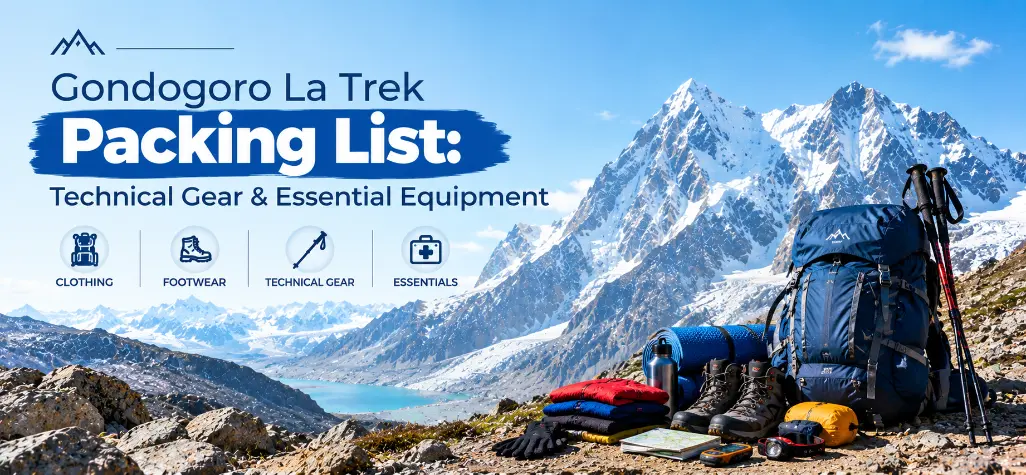
Preparing a Gondogoro La Trek packing list requires more planning than packing for a regular hiking holiday. Located in Pakistan’s Karakoram range, Gondogoro La reaches approximately 5,585 metres (18,323 feet) and connects the Concordia and Baltoro Glacier region with the remote Hushe Valley. The crossing involves high-altitude terrain, snow and ice, steep slopes, and sections where specialist mountaineering equipment may be required.
For a successful trek, you need three things: reliable technical equipment, a suitable clothing and footwear system, and essential personal supplies. Your gear must protect you from cold, wind, intense sunlight and changing mountain conditions without making your backpack unnecessarily heavy.
This Gondogoro La Trek packing list covers the equipment you should prepare before travelling to Pakistan, from crampon-compatible boots and climbing hardware to sleeping bags, waterproof clothing and first-aid essentials.
Whether you are planning the K2 Base Camp and Gondogoro La Trek for the first time or upgrading your existing trekking equipment, use this checklist as a starting point and confirm the final requirements with your trekking operator.
Technical Gear for the Gondogoro La Pass Crossing
The most important difference between the Gondogoro La crossing and a standard trekking route is the need for technical equipment. Exact requirements depend on snow conditions, the rope system, your operator’s safety procedures, and the equipment the guide team provides.
K2 Adventure’s official trekking gear list includes specialist mountaineering equipment for Gondogoro La.
Crampons
Crampons attach to your boots and provide traction on snow and ice. For Gondogoro La, they must be compatible with your chosen boots and suitable for the terrain expected on the crossing day.
Before departure:
- Check the crampon attachment system against your boots.
- Test the fit before travelling.
- Learn how to walk safely in crampons under qualified instruction.
- Carry the correct adjustment tools if the manufacturer recommends them.
Do not assume that every hiking boot can safely accommodate crampons. Ask your operator which boot and crampon combination is appropriate for the current route conditions.
Mountaineering Boots
Footwear is one of the most important decisions on your Gondogoro La trek packing list. You may need ordinary trekking boots for much of the approach and more technical footwear for the pass itself.
Your operator should specify the required boot category. K2 Adventure lists mountaineering boots compatible with crampons and states a minimum Grade B2 in its technical gear guidance.
Choose boots that:
- Fit comfortably with your intended trekking socks.
- Provide sufficient stiffness and support for the required crampons.
- Have been tested before the expedition.
- Offer suitable insulation and weather protection for the expected conditions.
Never bring brand-new boots to a high-altitude expedition without breaking them in.
Ice Axe
An ice axe may be required for balance, movement on snow and other mountaineering tasks. The right model depends on the terrain and your expedition team’s guidance.
Owning an ice axe is not enough. You must understand how to carry and use it correctly, including any relevant safety techniques taught by a qualified instructor. Follow your guide’s instructions throughout the crossing.
Climbing Harness and Locking Carabiners
A climbing harness lets you connect to a suitable safety system when needed. Locking carabiners connect compatible components, but their correct use depends on the rope system your guide team establishes.
Check that:
- Your harness fits securely over your trekking clothing.
- Carabiners lock and function correctly.
- All equipment is in good condition and appropriate for its intended use.
- You know how your guide expects you to connect to fixed ropes.
Helmet, Slings and Prusik Loops
A climbing helmet protects your head from impacts, including potential rockfall. Slings and Prusik loops may form part of the technical safety system used on the pass.
Confirm the exact quantities, lengths and specifications with your operator. Do not improvise connections or use unfamiliar equipment without proper instruction.
Important: Technical equipment does not replace experience, qualified guiding or suitable mountain conditions. Proceed with the crossing only when the responsible guide team considers it safe.
Clothing Checklist for Cold, Windy and High-Altitude Conditions
The weather on the Karakoram glaciers can change quickly. Lower sections may feel warm during the day, while high camps and early-morning starts can be extremely cold. A practical clothing system lets you add or remove layers as conditions change.
Base Layers
Pack thermal base-layer tops and bottoms that help manage moisture and retain warmth. Merino wool and suitable synthetic fabrics are popular choices.
Avoid relying entirely on cotton because it retains moisture and becomes uncomfortable in cold conditions.
Insulating Layers
Your mid-layers provide warmth between the base layer and outer shell.
Include:
- One or more fleece or warm mid-layer tops.
- A substantial insulated jacket, such as a down or synthetic-filled jacket.
- Thermal trousers or extra insulation, as your operator recommends.
Choose insulation based on expected temperatures, your personal cold tolerance and the expedition’s equipment guidance.
Waterproof and Windproof Outerwear
A reliable waterproof jacket and waterproof over-trousers help protect against wind, precipitation and wet snow.
Look for equipment that fits over your insulating layers without restricting movement. Test the jacket hood, zips and cuffs before leaving home.
Gloves, Hats and Neck Protection
Pack several levels of hand protection rather than relying on one pair of gloves.
Your checklist should include:
- Lightweight liner gloves.
- Warm insulated gloves or mittens.
- A warm beanie.
- A sun hat.
- A buff or neck gaiter.
Ask your operator whether heavier technical gloves or additional protection are needed for the pass crossing.
Trekking Trousers and Socks
Take comfortable trekking trousers, thermal leggings and enough trekking socks for the planned journey. Bring spare pairs and avoid wearing damp socks for long periods.
Gaiters can help keep snow, loose stones and debris out of your boots when appropriate for the route.
Essential Footwear for the Gondogoro La Trek
Footwear should be selected as a system rather than as separate items.
| Item | Why you need it |
|---|---|
| Broken-in trekking boots | Support and comfort on long approaches |
| Compatible mountaineering boots, if required | Technical movement on the pass |
| Correctly fitted crampons | Traction on snow and ice |
| Trekking socks | Comfort and moisture management |
| Gaiters | Help keep snow and debris outside boots |
| Lightweight camp shoes | Let your feet rest at camp |
| River-crossing sandals or suitable shoes | Useful where the itinerary requires safe water crossings |
Do not assume that your regular trekking boots are suitable for the technical crossing. Ask your operator to confirm whether separate mountaineering boots are required and whether any equipment can be rented reliably in Skardu.
Backpack, Duffel Bag and Sleeping Equipment
An organised packing system makes it easier to find equipment in remote camps and helps protect essential items from moisture.
Daypack
A daypack of approximately 30–40 litres is a practical starting point for carrying water, snacks, waterproof layers, sun protection, a camera and personal essentials. K2 Adventure’s gear list recommends a 32–42-litre daypack.
Choose a comfortable backpack with adjustable straps and a suitable hip belt. A rain cover and waterproof dry bags offer additional protection.
Expedition Duffel Bag
Use a durable duffel bag for equipment the support team carries. Check your operator’s baggage allowance and packing instructions before purchasing a bag.
Separate your gear into labelled dry bags or packing cubes, such as:
- Thermal clothing.
- Spare socks and underwear.
- Sleeping equipment.
- Electronics and documents.
- First-aid supplies.
Sleeping Bag and Sleeping Mat
A suitable sleeping bag is essential for multi-day camping in the Karakoram. K2 Adventure lists a sleeping bag with a comfort rating of approximately -16°C in its gear guidance.
Treat that rating as a starting point, not a universal specification. Confirm the expected temperatures and the operator’s requirements before choosing your bag. Also pack a suitable sleeping mat, as insulation from the ground is important for warmth and comfort.
A sleeping bag liner is optional and can help with cleanliness and provide extra warmth, depending on the product.
Sun Protection, Water and Hydration Equipment
High-altitude trekking exposes you to intense sunlight, including reflected ultraviolet radiation from snow and ice. Cold weather does not eliminate the risk of sunburn.
Pack the following:
- UV-protective sunglasses suitable for glacier conditions.
- High-SPF sunscreen.
- SPF lip balm.
- A sun hat and neck protection.
- Two water bottles or a suitable hydration system.
- Water purification equipment if recommended by your operator.
- Electrolyte or oral rehydration products where appropriate.
K2 Adventure’s existing gear list recommends two one-litre water bottles and sun-protection essentials.
Confirm how drinking water will be prepared during your trek. Never assume untreated water from a stream or glacier is safe to drink.
First-Aid Kit and Personal Medication
Your personal medical kit should cover minor problems, given the limited access to medical facilities on remote mountain routes.
Consider packing:
- Blister plasters and appropriate wound dressings.
- Personal prescription medicines.
- Antiseptic supplies.
- Pain relief that you can safely use.
- Oral rehydration salts.
- Any personal allergy medication.
- Hand sanitiser and basic hygiene supplies.
Discuss altitude-related medication, including acetazolamide (commonly known as Diamox), with a qualified healthcare professional before the trek. Do not start prescription medication based solely on a packing checklist.
Keep essential medicines in accessible, clearly labelled packaging, and carry important medication in your personal daypack rather than in a porter bag.
Remember that a first-aid kit cannot replace a medical assessment or an appropriate altitude-safety plan. Report symptoms such as worsening headache, nausea, unusual fatigue or dizziness to your guide. Severe symptoms, particularly confusion or difficulty walking straight, require urgent medical attention and may mean immediate descent is necessary.
Electronics, Navigation and Useful Accessories
Although the Gondogoro La region is remote, a few small accessories can make the expedition easier.
Recommended items include:
- Headlamp with spare or fully charged batteries.
- Power bank and charging cables.
- Phone and camera.
- Waterproof bags for electronics.
- Small repair kit with suitable tape, needle and thread.
- Quick-drying towel and basic toiletries.
- Earplugs for sleeping in shared tents.
- Lightweight personal snacks.
- Passport copies and essential travel documents.
- Cash in suitable denominations for planned expenses.
A headlamp is especially important for early starts and moving around camp after dark. Keep electronics protected from cold and moisture, and do not rely on mobile coverage or regular charging opportunities in remote areas.
Gondogoro La Trek Packing Checklist
Use this quick checklist while preparing your equipment.
| Category | Items to check |
|---|---|
| Technical equipment | Crampons, compatible boots, ice axe, harness, helmet, carabiners and operator-specified slings or prusik loops |
| Clothing | Thermal base layers, fleece, insulated jacket, waterproof shell, trekking trousers and warm gloves |
| Footwear | Broken-in trekking boots, technical boots if required, socks, gaiters and camp shoes |
| Sleeping equipment | Cold-weather sleeping bag and sleeping mat |
| Bags | Daypack, expedition duffel and waterproof dry bags |
| Sun and water | Glacier sunglasses, sunscreen, SPF lip balm and water containers |
| Health and hygiene | Personal medicines, blister care, first-aid supplies and toiletries |
| Electronics | Headlamp, spare batteries, power bank and charging cables |
| Documents | Passport, copies, insurance details and relevant permits or trip documents |
Use this checklist alongside the K2 Adventure official gear list. The final technical equipment requirements should always come from your operator and guide team.
Packing Tips Before Travelling to Pakistan
A good Gondogoro La trek packing strategy starts several weeks before departure.
Test your equipment. Walk in your boots with the socks you intend to use. Test your waterproof layers, sleeping bag and backpack before travelling.
Practise with technical gear. Arrange suitable instruction for crampons, an ice axe, a harness and any other equipment required for the crossing. Do not wait until you reach the mountain to learn the basics.
Check baggage limits. Confirm the permitted weight for domestic flights, porter loads and expedition duffel bags. Keep valuables, travel documents and essential medication accessible.
Ask what is provided. Some operators provide or rent selected technical equipment, while others require trekkers to bring their own. Confirm availability, condition, fit and responsibility for each item in writing.
Avoid unnecessary weight: Prioritise safety-critical equipment and practical clothing. Multiple bulky items that perform the same function can add weight without improving your preparation.
Review the itinerary. The route, weather and crossing conditions influence the final equipment list. Review your plans with your operator before departure.
For route details and trip preparation, explore the K2 Base Camp Trek information and K2 Adventure’s holiday information guide.
Conclusion
A carefully prepared Gondogoro La Trek packing list helps you approach one of Pakistan’s most demanding high-altitude trekking routes with greater confidence. Your priorities should be compatible technical equipment, dependable footwear, layered clothing, cold-weather sleeping gear, sun protection and a well-organised personal medical kit.
Most importantly, packing the right equipment is only one part of preparation. You also need appropriate experience, technical training, acclimatisation and a qualified guide team that can assess conditions on the pass.
Start with this checklist, review the requirements with your operator, and test your equipment before leaving for the Karakoram. Thoughtful preparation can make your trek more comfortable and help you respond more effectively to the challenges of high-altitude travel.
FAQs About Gondogoro La Trek
Pack technical gear specified by your operator, suitable trekking and mountaineering boots, compatible crampons, warm layered clothing, a cold-weather sleeping bag, waterproof outerwear, glacier sunglasses, sunscreen, water containers, a headlamp and personal first-aid supplies.
Crampons may be essential for the snow and ice encountered on the pass. The correct type must fit your boots and suit the route conditions. Confirm the required equipment with your guide team and practise using it before the trek.
You need well-fitted, broken-in trekking boots for the approach and whatever technical mountaineering boots your operator specifies for the crossing. K2 Adventure lists crampon-compatible mountaineering boots in its technical gear guidance. Don’t assume standard hiking boots suit every section.
K2 Adventure lists a sleeping bag with a comfort rating of approximately -16°C. Your final choice should reflect expected temperatures, the sleeping mat you use and the operator’s advice. Check the comfort rating rather than relying only on a manufacturer’s extreme-temperature rating.
Some trekking equipment may be available to rent in Skardu, but availability, condition and fit can vary. Contact your operator well before arrival to confirm which items are provided, which can be rented and which you must bring yourself.
The crossing involves high altitude and potentially technical snow, ice and steep terrain. It is not a suitable first mountain adventure for an unprepared beginner. Previous trekking experience, appropriate fitness, acclimatisation, technical preparation and qualified guiding are important.
Comments