Mustagh Tower Expedition Overview
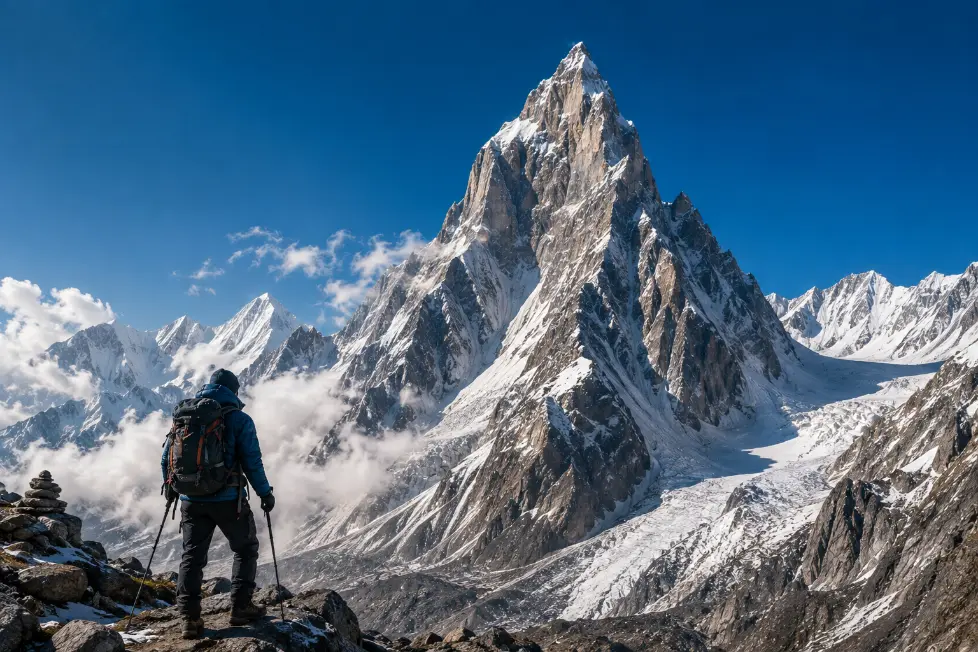
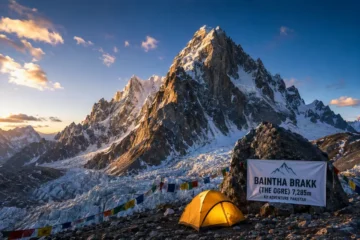
Mustagh Tower, also known as Muztagh Tower, is one of the most spectacular and technically demanding 7,000-meter peaks in Pakistan’s Karakoram. Rising to approximately 7,276 meters (23,871 feet), the mountain stands in the Baltoro Muztagh near the border between Pakistan’s Gilgit-Baltistan region and China’s Xinjiang region.
The mountain lies between the Baltoro and Sarpo Laggo glacier systems, placing it within one of the most dramatic high-altitude landscapes in the Karakoram. Its striking, tower-like appearance and steep ridges have made Mustagh Tower one of the most recognizable climbing objectives in northern Pakistan.
The mountain became internationally famous after Vittorio Sella photographed it during the 1909 Italian expedition to K2. Viewed from the upper Baltoro, the mountain’s twin summits appeared aligned, creating the impression of a narrow, almost impregnable tower. The photograph later became associated with the description “The Last Citadel.”
Mustagh Tower is not a conventional trekking peak. The expedition involves glacier travel, steep snow and ice, exposed ridges, technical climbing, and high-altitude route-finding. Climbers must be prepared for rapidly changing weather, difficult terrain, cold temperatures and long periods of self-sufficient climbing.
The first ascent was achieved in 1956 by the British Baltoro Expedition, led by John M. Hartog. Ian McNaught-Davis, Joe Brown and Dr T. W. Patey completed the first ascent via the Northwest Arête, reaching the summit in early July. A French expedition simultaneously attempted the mountain from the southeast and also reached the summit shortly afterwards.
Today, a Mustagh Tower Expedition is considered an objective for highly experienced alpine and high-altitude climbers rather than beginners. The expedition combines the spectacular Baltoro approach with a serious technical climbing objective in the heart of the Karakoram.
Mustagh Tower Expedition Highlights
Climb Mustagh Tower / Muztagh Tower – approximately 7,276m.
Explore one of the most iconic technical peaks of the Karakoram.
Trek through the spectacular Baltoro Glacier region.
Approach the mountain through Askole, Paiju, Urdukas, Goro and the Concordia region.
Experience views of some of the world’s most famous Karakoram peaks.
Climb in remote glacier, snow, ice and mixed alpine terrain.
Attempt a technically demanding 7,000m-class mountain.
Follow a route strategy determined by current mountain conditions.
Establish and operate a fully supported Base Camp.
Complete acclimatization rotations before the summit attempt.
Benefit from experienced local expedition staff and logistical support.
Experience one of Pakistan’s most demanding and rewarding mountaineering objectives.
Mustagh Tower Climbing Profile
Mustagh Tower is a serious technical mountaineering objective. It should not be confused with trekking peaks or relatively straightforward 7,000-meter mountains.
Historical ascents demonstrate the mountain’s technical character. The 1956 British route involved highly crevassed glacier terrain, a steep ice wall, exposed climbing above the West Col and technical rock and snow sections on the upper ridge. The historical expedition established several high camps, with the upper section presenting particularly demanding climbing and exposure.
Modern teams may select different routes depending on conditions, objectives, permits, and team capabilities. The exact climbing line, camp locations and technical difficulties should therefore be confirmed by the expedition leader rather than treated as fixed commercial itinerary details.
Climbers should have experience with:
High-altitude mountaineering
Glacier travel
Crampon and ice-axe techniques
Fixed-rope climbing
Ascenders and descenders
Steep snow and ice
Mixed climbing
Technical rock climbing
Rappelling
Route finding
High-altitude bivouac or camp procedures
Cold-weather expedition management
Best Time for Mustagh Tower Expedition
The main climbing window for Mustagh Tower is during the summer Karakoram climbing season, generally from June through August.
July and August are commonly used for high-altitude expeditions in the region, although the actual summit window depends on weather, snow conditions, route stability and team acclimatization.
Because Mustagh Tower is a technical mountain, the expedition schedule should remain flexible. Heavy snowfall, high winds, avalanche conditions, unstable ice or poor visibility can require teams to delay their summit attempt.
The expedition leader should make final decisions about climbing rotations and summit attempts based on current mountain conditions rather than a fixed calendar.
Route to Mustagh Tower Base Camp
The expedition begins in Islamabad before continuing toward Skardu, the main gateway to the high Karakoram.
From Skardu, the expedition travels toward Askole, the traditional starting point for major Baltoro expeditions.
The trekking approach generally follows the Baltoro corridor through areas such as:
Askole → Jhola → Paiju → Urdukas → Goro → Concordia → Mustagh Tower Base Camp
The exact approach may vary depending on glacier conditions, transportation arrangements and the selected route to Base Camp.
The Baltoro approach is itself one of the highlights of the expedition. Climbers travel through a spectacular mountain environment surrounded by some of the most famous peaks of the Karakoram.
The approach eventually leads toward the Mustagh Tower area and the selected Base Camp location.
Historical and modern expeditions have used different Base Camp positions depending on the climbing route. A 2006 expedition, for example, established Base Camp near the confluence of the Younghusband and Biange glaciers for an attempt on the southeast ridge.
What’s Included/Excluded
| INCLUDED |
|
||||||||||||||||||
| NOT INCLUDED |
|
Additional information
| location | Gilgit-Baltistan, Pakistan |
|---|---|
| duration | 40 Days / 39 Nights |
| tour type | Mountaineering Expedition |
| destination | Gilgit-Baltistan |
| group size | 10 people |
Mustagh Tower Expedition Itinerary
Day 01: Arrival in Islamabad, Pakistan
• Altitude: 540 meters
• Travel Time: N/A
• Weather: Warm; Avg High: 35°C / 95°F
Welcome to Pakistan! Upon arrival at Islamabad International Airport, our representative will receive you and transfer you to your hotel. Meet your expedition leader for a detailed briefing, equipment inspection, permit verification, and final expedition preparations.
Accommodation: Hotel in Islamabad
Meals: Breakfast, Lunch, Dinner
Day 02: Fly from Islamabad to Skardu
• Altitude: Approximately 2,230 meters
• Flight Time: Approximately 1 Hour
• Weather: Cool mountain climate
Take a domestic flight from Islamabad to Skardu, the gateway to the Karakoram. Weather permitting, enjoy spectacular aerial views of the mountains. Upon arrival, transfer to your hotel and meet the local expedition team.
Accommodation: Hotel in Skardu
Meals: Breakfast, Lunch, Dinner
Note: If the flight is cancelled due to weather or operational conditions, road transportation will be arranged where possible.
Day 03: Preparation and Acclimatization in Skardu
• Altitude: Approximately 2,230 meters
• Activity Time: 3–4 Hours
• Weather: Cool mountain climate
Spend the day in Skardu completing final expedition preparations. Check climbing equipment, food supplies, cargo, permits, and technical gear. The expedition leader will also provide a detailed briefing about the Baltoro Glacier approach and climbing objectives.
Accommodation: Hotel in Skardu
Meals: Breakfast, Lunch, Dinner
Day 04: Drive from Skardu to Askole
• Altitude: Approximately 3,050 meters
• Driving Time: 6–8 Hours
• Weather: Cool and dry mountain climate
Begin the overland journey toward Askole, the traditional starting point for the Baltoro trekking route. The road follows spectacular mountain valleys and remote settlements before reaching Askole.
Accommodation: Camping / Guest House
Meals: Breakfast, Lunch, Dinner
Day 05: Trek from Askole to Jhola
• Altitude: Approximately 3,100 meters
• Trekking Time: 5–7 Hours
• Weather: Pleasant during the day; cool evenings
Begin trekking from Askole toward Jhola. The trail follows the Braldu River through rugged valleys and gradually introduces the team to the demanding terrain of the Karakoram.
Accommodation: Camping
Meals: Breakfast, Lunch, Dinner
Day 06: Trek from Jhola to Paiju
• Altitude: Approximately 3,400 meters
• Trekking Time: 6–7 Hours
• Weather: Warm during the day; cool evenings
Continue toward Paiju along the Braldu Valley. The trail crosses rocky terrain, streams, and glacial landscapes while providing increasingly impressive views of the surrounding Karakoram peaks.
Accommodation: Camping
Meals: Breakfast, Lunch, Dinner
Day 07: Rest and Acclimatization at Paiju
• Altitude: Approximately 3,400 meters
• Activity Time: Rest & Acclimatization
• Weather: Cool mountain climate
Take a rest and acclimatization day at Paiju. The expedition team checks equipment, organizes loads, and prepares for the glacier approach toward Concordia and Mustagh Tower Base Camp.
Accommodation: Camping
Meals: Breakfast, Lunch, Dinner
Day 08: Trek from Paiju to Khoburtse
• Altitude: Approximately 3,800 meters
• Trekking Time: 6–7 Hours
• Weather: Cool alpine conditions
Continue deeper into the Baltoro Valley toward Khoburtse. The landscape becomes increasingly glaciated, with dramatic views of the surrounding Karakoram peaks.
Accommodation: Camping
Meals: Breakfast, Lunch, Dinner
Day 09: Trek from Khoburtse to Urdukas
• Altitude: Approximately 4,130 meters
• Trekking Time: 4–6 Hours
• Weather: Cold mornings and evenings
Trek toward Urdukas, a spectacular viewpoint along the Baltoro Glacier. The trail provides impressive views of Trango Towers, Cathedral Peaks, and other major Karakoram formations.
Accommodation: Camping
Meals: Breakfast, Lunch, Dinner
Day 10: Trek from Urdukas to Goro II
• Altitude: Approximately 4,300 meters
• Trekking Time: 6–7 Hours
• Weather: Cold alpine conditions
Continue across the Baltoro Glacier toward Goro II. Glacier travel becomes more prominent, and the surrounding peaks rise dramatically above the route.
Accommodation: Camping
Meals: Breakfast, Lunch, Dinner
Day 11: Trek from Goro II to Concordia
• Altitude: Approximately 4,600 meters
• Trekking Time: 6–8 Hours
• Weather: Cold and windy alpine conditions
Trek toward Concordia, one of the most spectacular mountain junctions in the Karakoram. From here, climbers can see some of the world’s most famous peaks, including K2, Broad Peak, and the surrounding Baltoro giants.
Accommodation: Camping
Meals: Breakfast, Lunch, Dinner
Day 12: Concordia to Mustagh Tower Base Camp
• Altitude: Approximately 4,600–4,800 meters
• Trekking Time: 5–7 Hours
• Weather: Cold alpine conditions
Leave Concordia and continue toward the Mustagh Tower Base Camp. The approach route enters the remote glacier systems surrounding Mustagh Tower. Upon arrival, establish the expedition’s Base Camp facilities.
Accommodation: Base Camp
Meals: Breakfast, Lunch, Dinner
Day 13: Rest and Acclimatization at Base Camp
• Altitude: Approximately 4,600–4,800 meters
• Activity Time: Rest & Acclimatization
• Weather: Cold alpine conditions
Spend the day resting and acclimatizing at Base Camp. Guides conduct equipment checks, glacier-travel training, rope-system practice, and a detailed briefing about the climbing route.
Accommodation: Base Camp
Meals: Breakfast, Lunch, Dinner
Day 14: Acclimatization Climb and Load Ferry
• Maximum Altitude: Approximately 5,200 meters
• Climbing Time: 5–7 Hours
• Weather: Cold
Make an acclimatization climb above Base Camp while carrying selected equipment and supplies. The team gains additional altitude before returning to Base Camp for rest.
Accommodation: Base Camp
Meals: Breakfast, Lunch, Dinner
Day 15: Rest Day at Base Camp
• Altitude: Approximately 4,600–4,800 meters
• Activity Time: Rest Day
• Weather: Cold alpine conditions
Take a recovery day at Base Camp. The expedition leader reviews weather forecasts, route conditions, equipment, and the team’s acclimatization before beginning the first major climbing rotation.
Accommodation: Base Camp
Meals: Breakfast, Lunch, Dinner
Day 16: Climb Toward Camp I
• Altitude: Approximately 5,300–5,600 meters
• Climbing Time: 5–7 Hours
• Weather: Cold alpine conditions
Begin the first major climbing rotation toward Camp I. The route involves glacier travel and snow-covered terrain, with technical sections depending on the current route conditions.
Accommodation: Camp I
Meals: Breakfast, Lunch, Dinner
Day 17: Camp I to Higher Camp / Camp II
• Altitude: Approximately 5,800–6,200 meters
• Climbing Time: 6–8 Hours
• Weather: Freezing temperatures
Continue higher through glacier, snow, and mixed terrain. Climbers may use fixed ropes on technical sections according to the established route and current conditions.
Accommodation: Camp II / Higher Camp
Meals: Breakfast, Lunch, Dinner
Day 18: Acclimatization Climb and Descent
• Maximum Altitude: Approximately 6,300 meters
• Climbing Time: 6–8 Hours
• Weather: Freezing alpine conditions
Climb above the higher camp to gain additional acclimatization and assess the upper route. After reaching the planned high point, descend toward Base Camp.
Accommodation: Base Camp
Meals: Breakfast, Lunch, Dinner
Day 19: Rest and Recovery at Base Camp
• Altitude: Approximately 4,600–4,800 meters
• Activity Time: Rest Day
• Weather: Cold mountain climate
Recover at Base Camp following the acclimatization rotation. The climbing team reviews route conditions, weather forecasts, and the remaining summit strategy.
Accommodation: Base Camp
Meals: Breakfast, Lunch, Dinner
Day 20: Route Preparation and Load Ferry
• Maximum Altitude: Approximately 5,800–6,000 meters
• Climbing Time: 5–7 Hours
• Weather: Cold
Carry additional food, fuel, ropes, and climbing equipment toward the higher camps. The climbing team prepares the route and evaluates snow and ice conditions for the summit rotation.
Accommodation: Base Camp
Meals: Breakfast, Lunch, Dinner
Day 21: Rest and Weather Assessment
• Altitude: Approximately 4,600–4,800 meters
• Activity Time: Rest & Preparation
• Weather: Continuously monitored
Rest at Base Camp while the expedition leader monitors the weather and route conditions. The team prepares technical equipment and confirms the strategy for the final climbing rotation.
Accommodation: Base Camp
Meals: Breakfast, Lunch, Dinner
Day 22: Begin Final Summit Rotation
• Altitude: Approximately 5,300–5,600 meters
• Climbing Time: 5–7 Hours
• Weather: Cold alpine conditions
Begin the final summit rotation. Climbers ascend toward Camp I carrying essential technical equipment, food, and supplies needed for the higher camps and summit attempt.
Accommodation: Camp I
Meals: Breakfast, Lunch, Dinner
Day 23: Camp I to Camp II / Higher Camp
• Altitude: Approximately 5,800–6,300 meters
• Climbing Time: 6–8 Hours
• Weather: Freezing temperatures
Continue upward through glacier and mixed terrain toward the higher camps. Fixed ropes may be used on technical sections according to route conditions and the climbing team’s strategy.
Accommodation: Camp II / Higher Camp
Meals: Breakfast, Lunch, Dinner
Day 24: Climb Toward High Camp
• Altitude: Approximately 6,400–6,800 meters
• Climbing Time: 5–8 Hours
• Weather: Freezing alpine conditions
Climb toward the highest planned camp below the summit. The exact location of High Camp will depend on snow conditions, route safety, weather, and the expedition leader’s assessment.
Accommodation: High Camp
Meals: Breakfast, Lunch, Dinner
Day 25: Rest and Summit Preparation at High Camp
• Altitude: Approximately 6,400–6,800 meters
• Activity Time: Rest & Preparation
• Weather: Continuously monitored
Rest at High Camp and prepare for the summit attempt. Guides inspect crampons, harnesses, ascenders, ice axes, ropes, clothing, headlamps, food, and other essential equipment.
Accommodation: High Camp
Meals: Breakfast, Lunch, Dinner
Day 26: Summit Mustagh Tower (7,276m) and Descend
• Maximum Altitude: 7,276 meters
• Climbing Time: 10–16+ Hours
• Weather: Extreme alpine conditions
Today is the main summit objective of the expedition. Begin the summit push during the safest available weather window, ascending through steep snow, ice, rock, and mixed technical terrain toward the summit of Mustagh Tower (7,276m). The route is highly demanding and requires strong high-altitude mountaineering skills. After reaching the summit, begin a controlled descent toward the highest safe camp.
Accommodation: High Camp / Camp II
Meals: Breakfast, Lunch, Dinner
Note: Summit timing and route conditions may vary according to weather, snow and ice conditions, acclimatization, technical route conditions, and the expedition leader’s assessment.
Day 27: Descend to Base Camp
• Altitude: Approximately 4,600–4,800 meters
• Climbing Time: 6–9 Hours
• Weather: Cold alpine conditions
Continue descending from the higher camps toward Mustagh Tower Base Camp. After reaching Base Camp, rest and organize climbing equipment following the summit attempt.
Accommodation: Base Camp
Meals: Breakfast, Lunch, Dinner
Day 28: Reserve Summit / Weather Contingency Day
• Altitude: Approximately 4,600–4,800 meters
• Activity Time: Flexible
• Weather: Dependent on conditions
This reserve day is available for an additional summit attempt if weather, route conditions, or other circumstances prevent the team from reaching the summit on the planned summit day. If the summit has already been completed, the day can be used for recovery or descent preparation.
Accommodation: Base Camp
Meals: Breakfast, Lunch, Dinner
Day 29: Trek from Base Camp Toward Concordia
• Altitude: Approximately 4,600 meters
• Trekking Time: 5–7 Hours
• Weather: Cold alpine conditions
Leave Mustagh Tower Base Camp and begin the return journey across the glacier toward Concordia. The team gradually descends while enjoying final views of the surrounding Karakoram giants.
Accommodation: Camping
Meals: Breakfast, Lunch, Dinner
Day 30: Concordia to Goro II
• Altitude: Approximately 4,300 meters
• Trekking Time: 6–8 Hours
• Weather: Cold mountain climate
Continue the return trek across the Baltoro Glacier toward Goro II. The changing landscape and lower altitude provide a welcome opportunity for recovery after the high-altitude climbing phase.
Accommodation: Camping
Meals: Breakfast, Lunch, Dinner
Day 31: Goro II to Urdukas
• Altitude: Approximately 4,130 meters
• Trekking Time: 6–7 Hours
• Weather: Cool alpine conditions
Continue toward Urdukas along the Baltoro Glacier. Enjoy views of the surrounding peaks while gradually moving toward lower elevations.
Accommodation: Camping
Meals: Breakfast, Lunch, Dinner
Day 32: Urdukas to Paiju
• Altitude: Approximately 3,400 meters
• Trekking Time: 6–8 Hours
• Weather: Mild mountain climate
Descend from Urdukas toward Paiju, leaving the higher glacier environment behind. The warmer temperatures and lower elevation provide a welcome change after the expedition’s high-altitude phase.
Accommodation: Camping
Meals: Breakfast, Lunch, Dinner
Day 33: Paiju to Jhola
• Altitude: Approximately 3,100 meters
• Trekking Time: 6–7 Hours
• Weather: Pleasant during the day
Continue trekking through the Braldu Valley toward Jhola. The route gradually leaves the main glacier environment as the team approaches the lower valleys.
Accommodation: Camping
Meals: Breakfast, Lunch, Dinner
Day 34: Jhola to Askole
• Altitude: Approximately 3,050 meters
• Trekking Time: 5–7 Hours
• Weather: Mild mountain climate
Complete the final trekking section from Jhola to Askole. Upon arrival, meet the vehicle team and prepare the expedition equipment and cargo for transportation back to Skardu.
Accommodation: Camping / Guest House
Meals: Breakfast, Lunch, Dinner
Day 35: Drive from Askole to Skardu
• Altitude: Approximately 2,230 meters
• Driving Time: 6–8 Hours
• Weather: Mild mountain climate
Drive back from Askole to Skardu through the spectacular mountain valleys. Upon arrival, check into the hotel and enjoy a well-earned rest after completing the Baltoro approach and climbing phase.
Accommodation: Hotel in Skardu
Meals: Breakfast, Lunch, Dinner
Day 36: Rest and Recovery in Skardu
• Altitude: Approximately 2,230 meters
• Activity Time: Rest Day
• Weather: Mild mountain climate
Enjoy a recovery day in Skardu. The expedition team organizes equipment and cargo while participants can rest after the demanding Mustagh Tower climb.
Accommodation: Hotel in Skardu
Meals: Breakfast, Lunch, Dinner
Day 37: Fly from Skardu to Islamabad
• Altitude: 540 meters
• Flight Time: Approximately 1 Hour
• Weather: Warm
Take a domestic flight from Skardu to Islamabad, weather permitting. Upon arrival, transfer to your hotel and relax after the mountain expedition.
Accommodation: Hotel in Islamabad
Meals: Breakfast, Lunch, Dinner
Note: If the flight is cancelled, road transportation will be arranged where possible.
Day 38: Rest and Recovery in Islamabad
• Altitude: 540 meters
• Activity Time: Rest Day
• Weather: Warm
Enjoy a recovery day in Islamabad following the expedition. This day also provides additional flexibility in case of transportation delays.
Accommodation: Hotel in Islamabad
Meals: Breakfast, Lunch, Dinner
Day 39: Expedition Debrief and Free Day
• Altitude: 540 meters
• Activity Time: Flexible
• Weather: Warm
Meet with the expedition team for a final debrief and review of the expedition. Participants may use the day to explore Islamabad, shop for souvenirs, or rest before international departure.
Accommodation: Hotel in Islamabad
Meals: Breakfast, Lunch, Dinner
Day 40: Departure from Islamabad
• Altitude: 540 meters
• Travel Time: Airport Transfer
• Weather: Warm
After breakfast, our representative will transfer you to Islamabad International Airport for your onward flight. Your Mustagh Tower Expedition concludes after an unforgettable journey through the Baltoro Glacier and the high mountains of Pakistan’s Karakoram.
Meals: Breakfast
FAQs About Mustagh Tower Expedition
The Mustagh Tower Expedition is an extremely challenging high-altitude mountaineering adventure to the summit of Mustagh Tower (approximately 7,276m) in Pakistan’s Karakoram. Climbers should have extensive experience on technical peaks above 6,000 meters and be proficient in glacier travel, steep snow and ice climbing, fixed-rope techniques, and high-altitude expedition skills. Excellent physical fitness and previous experience on demanding 7000m-class peaks are strongly recommended.
Mustagh Tower, also known as Muztagh Tower, is a prominent 7,000-meter peak in the Baltoro Muztagh range of the Karakoram in northern Pakistan. The mountain lies in the remote Baltoro region and is approached through the Baltoro Glacier, with the expedition route passing through spectacular landscapes around Askole, Paiju, Concordia, and the upper Baltoro region.
The main climbing season for Mustagh Tower is generally from June to August, when weather and mountain conditions are typically more suitable for high-altitude expeditions in the Karakoram. However, conditions can change rapidly, with snowfall, strong winds, avalanches, crevasses, and poor visibility affecting the route. The final summit attempt depends on actual weather, snow conditions, route safety, and the judgment of the expedition team.
Our Mustagh Tower Expedition is planned as a 40-day program covering arrival in Islamabad, travel to Skardu, the approach through Askole and the Baltoro Glacier, Base Camp acclimatization, climbing rotations, higher camps, summit attempt, contingency days, descent, return to Skardu and Islamabad, and departure from Pakistan. The itinerary includes reserve days to provide flexibility for weather, route conditions, and necessary acclimatization.
Participants should have substantial high-altitude mountaineering experience and be confident using crampons, ice axes, harnesses, ascenders, and fixed ropes. Previous experience with glacier travel, steep snow and ice, mixed climbing, exposed terrain, high-altitude camping, and expedition-style climbing is highly recommended. Because Mustagh Tower is a technically demanding 7,000-meter peak, it is not suitable for beginners or climbers without significant high-altitude experience.
The expedition package includes accommodation, airport transfers, transportation according to the itinerary, climbing permit processing, Base Camp services, experienced expedition leaders and local climbing guides, porters, meals, camping facilities, kitchen staff, and expedition logistics according to the agreed package. International flights, visa fees, personal climbing equipment, travel and rescue insurance, high-altitude porters above Base Camp, supplemental oxygen, personal expenses, and services not specifically mentioned in the package are not included.
K2 Adventure is a Pakistani mountaineering company specializing in high-altitude expeditions across the Karakoram, Himalayas, and Hindu Kush. Our experienced local guides, expedition support team, Base Camp management, transportation, climbing logistics, and dedicated support staff help provide comprehensive expedition support throughout the Mustagh Tower climbing program.

Tour Reviews
There are no reviews yet.
Leave a Review